Where you can legally fossick for gold in New South Wales: how the 70 fossicking districts and the State forest permit work, what you can dig and keep, and the best gold country region by region.
New South Wales is where the Australian gold rushes started, and there is still a lot of country where you can legally go looking. The catch is that NSW does it differently to the other states. There is no fossicking licence. Instead, what matters is whose land you are standing on. This guide explains how it works, then runs through the best gold country region by region, with a link to the free Dig Here guide for every place.
How fossicking works in NSW
New South Wales does not sell a general fossicking licence. If you are allowed to be on the land, fossicking with hand tools is lawful, and the minerals you separate while you stay inside the rules are yours. So the real question is always: am I allowed to be here?
- Fossicking districts: There are 70 gazetted fossicking districts. Inside one, you do not need the consent of an exploration licence holder. Everything else still applies: the landholder, mining leases and claims, national park rules. All 70 districts
- State forests: Some of the best gold country is State forest. You need one Forestry Corporation permit, $27.50 for 12 months, valid state-wide and applied for through Service NSW. Some compartments close for logging or safety, so check the Forestry Corporation map before you go.
- Private land: Ask the landholder and get a clear yes before you cross a fence.
- Crown land: Only certain unleased, unlicensed Crown land is open. Leased, licensed or managed Crown land needs permission.
- National parks: Stay out. The named exceptions are Grove Creek in Abercrombie Karst Conservation Reserve, Torrington State Conservation Area, and Nuggetty State Conservation Area away from the banks and flats of Tuena Creek.
- Mining titles: A mining lease, mineral claim or opal prospecting licence needs the holder's consent, even inside a fossicking district.
What you can use, dig and keep
- Hand tools only: pan, sieve, pick, shovel, hammer, a non-powered river sluice, and a metal detector. No pumps, dredges, trommels, powered highbankers, machinery or explosives.
- Disturb no more than one cubic metre of ground in any 48 hours, then put it back. Leave bushrock alone and leave the site clean.
- In any 48 hours one person may keep 50 grams of gold plus up to five nuggets of 10 grams or more, 100 grams of gemstones, and 10 kilograms of gold or gem-bearing material.
Central West: where it all began
The Central West is the heart of NSW gold. Ophir, near Orange, is where payable gold was found in 1851, and the Turon, Hill End and Sofala fields followed. It is also where most of the small, named fossicking districts are.
- Ophir: a public reserve north-east of Orange, on the ground of the 1851 discovery.
- Sofala Common: a small common on the Turon right beside the old gold town.
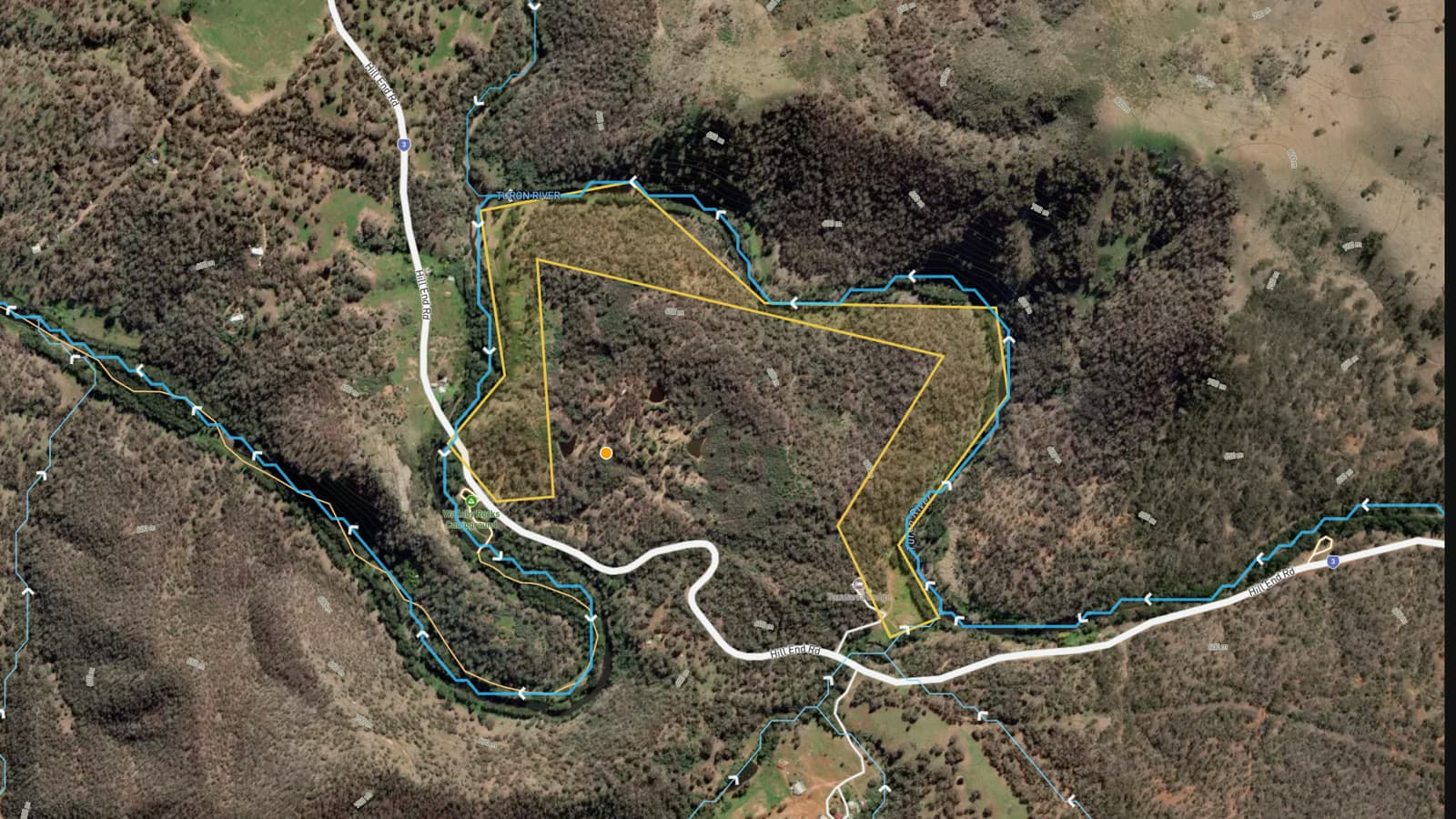
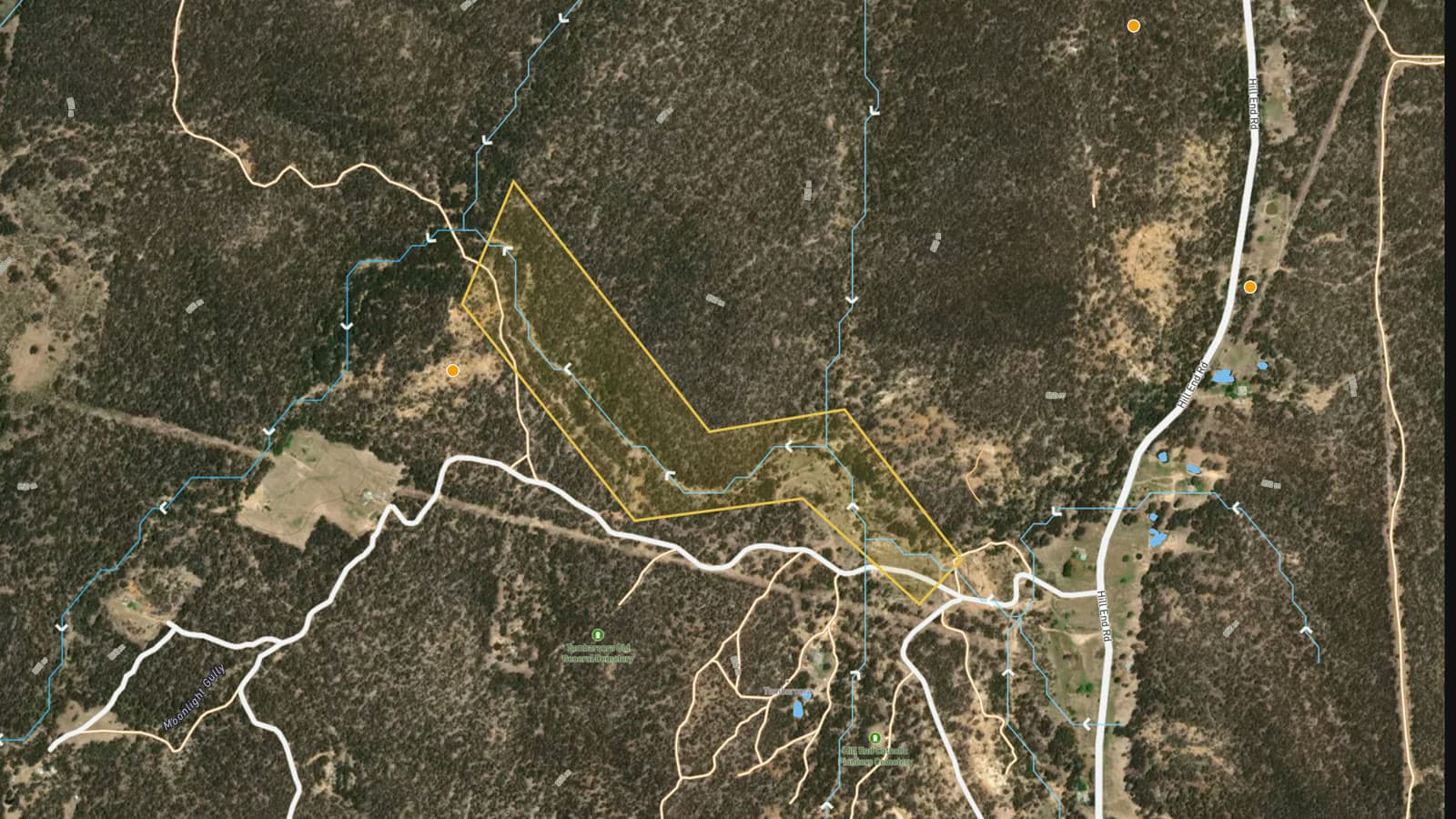
- Tambaroora and Golden Gully: the declared fossicking areas at Hill End. The Hill End townsite itself is an NPWS historic site with its own rules.
- Cole's Bridge on the Turon: a riverside camping and panning spot inside the Bathurst Regional district.
- Stuart Town Common, Poor Mans Gully and the shire-wide Mid-Western Regional, Cabonne and Blayney districts.
- State forests with a permit: Sunny Corner, one of the best-known detecting forests in the Central West, Vulcan near Oberon, and Kinross by Ophir.
New England and the north
New England is better known for tin and sapphires, but there is gold through it too. The Nundle district covers the old Peel River goldfield, and Kentucky Creek near Uralla is a small creek district. Walcha and Barraba are shire-wide. Up near Tenterfield, Boonoo and Bookookoorara State forests carry both tin and gold.
Southern Tablelands
Between Goulburn, Braidwood and Crookwell there are shire-wide districts at Tallaganda, Upper Lachlan and Goulburn Mulwaree, plus the small Tuena Creek district in old gold country. Tallaganda State Forest, between Braidwood and Captains Flat, needs the forest permit.
South West Slopes and the Snowy
The old gold towns along the Olympic Highway and up into the high country have plenty of options. Adelong Creek, Tumbarumba Creek and Young's Blackguard Gully are small creek districts, with shire-wide districts at Tumut, Tumbarumba, Young and Cootamundra. The forests around Tumut and Tumbarumba, including Bondo, Bago and Green Hills, are gold country under the forest permit.
South Coast and Monaro
On the coast, Eurobodalla, Bega Valley and Shoalhaven are shire-wide districts, and Mogo State Forest near Batemans Bay has a gold history. Inland on the Monaro, Cooma-Monaro is a shire-wide district, and the Badja, Bondi and Nalbaugh forests are worth a look with a permit.
Plan your trip
Before you go, open the spot on the Dig Here map. You can see the fossicking district or forest boundary, land tenure, historic gold workings and the watercourse layer, so you know which way the water runs and where gold is likely to drop out. Field Intelligence gives you the weather, fuel, water and the nearest emergency services for any spot, and you can download the area for offline use before you lose reception.
The NSW guide has a search box at the top: type a town, a creek or a forest and it will find the guide. Fill your holes, take your rubbish home, and good luck out there.