Every place in Queensland where you can legally fossick for gold, from the Clermont goldfield to Warwick, Gympie and Mount Morgan. Licences, rules, what to bring and where to start.
Queensland has seventeen places where you can legally fossick for gold right now. Most people have only heard of one or two. This guide covers every one of them: where they are, what the old-timers left behind, and what the ground looks like on the Dig Here map.
Prefer to read? Everything in the video is below, with a link to the free guide for every area.
The rules in sixty seconds
You need a Queensland fossicking licence for all of these places. You buy it online in a couple of minutes: $9.97 for a month, $37.84 for six months or $63.73 for a year, and a family licence covers the whole crew. Carry it with you.
The areas come in three types: fossicking areas, designated fossicking land, and general permission areas. Most of the gold ground is general permission areas, which are mostly state forest the government has opened to licensed fossickers.
- Hand tools only: pick, shovel, pan, sieve and metal detectors. No machinery, no generators.
- Keep holes to 2 m by 1 m and no deeper than half a metre, and fill them in before you leave.
- No camping in any of these gold areas. Book a caravan park or a motel in town.
- Mining leases and claims inside the areas are off limits. Download the official map for each area before you go.
Clermont: Queensland's forgotten goldfield
Most of Queensland's legal gold country is around one town: Clermont, in Central Queensland. In 1861 diggers found alluvial gold in the gullies south of town, and it kicked off one of Queensland's early gold rushes.
The richest gold at Clermont came from deep leads: ancient riverbeds buried under the landscape. Nuggets over fifteen grams were common. The old miners chased those leads, and what they left for us is the shallow gold that has weathered out of the old reefs and leads and now sits in the soil and the modern gullies.
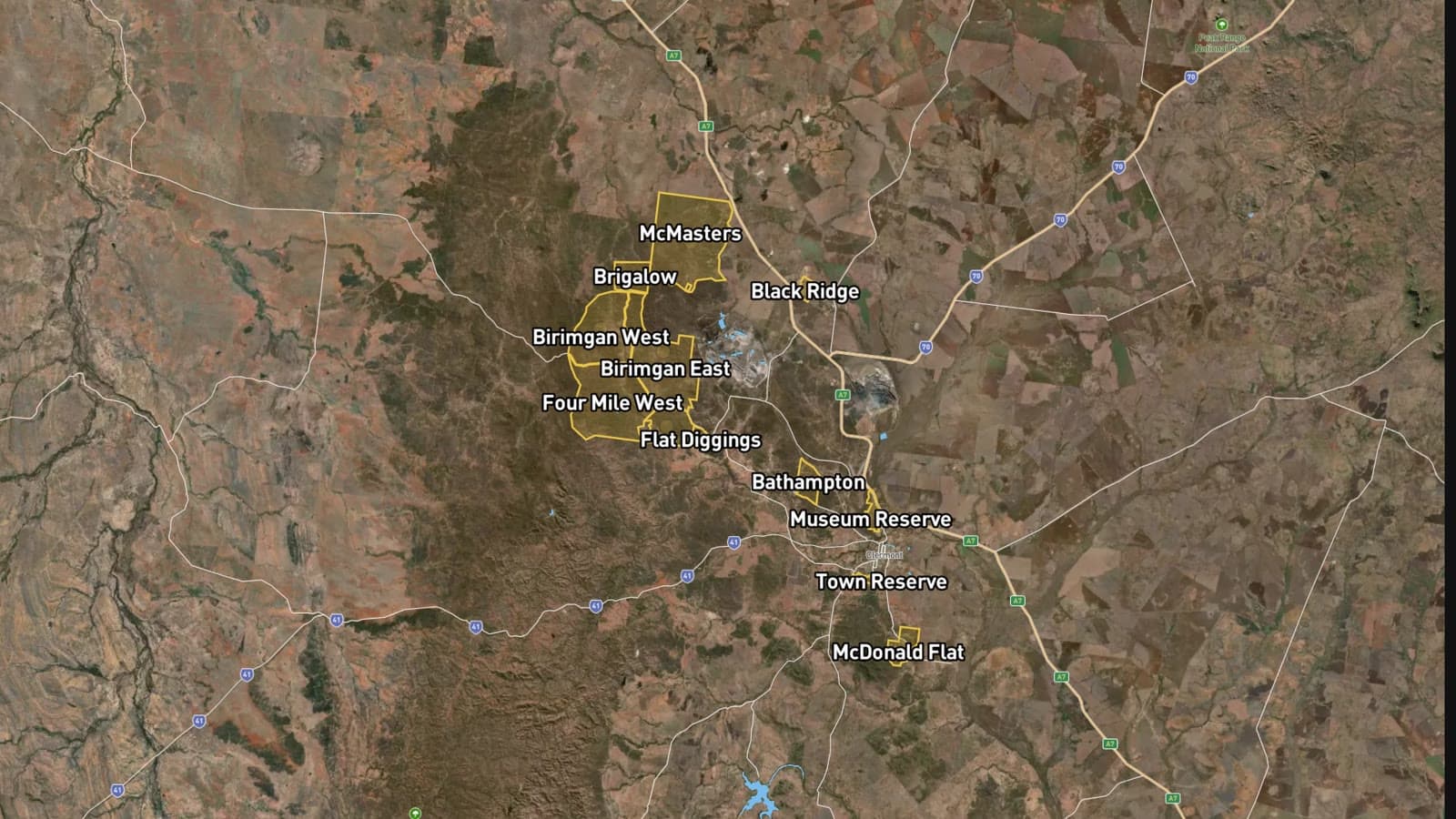
There are twelve general permission areas around Clermont, mostly north-west of town, with one to the south. These are the four I'd go to first.
1. McDonald Flat
The one area south of Clermont, and the one I'd circle in red. On the Dig Here map there are eighteen old gold workings inside the boundary and nearly fifty within a couple of kilometres, with exploration drill holes right on the doorstep. Old workings plus modern drilling plus legal access is the combination you're after. Start at the old workings, then work downhill: detect the edges of the old diggings and follow the gully down. McDonald Flat guide
2. Town Reserve
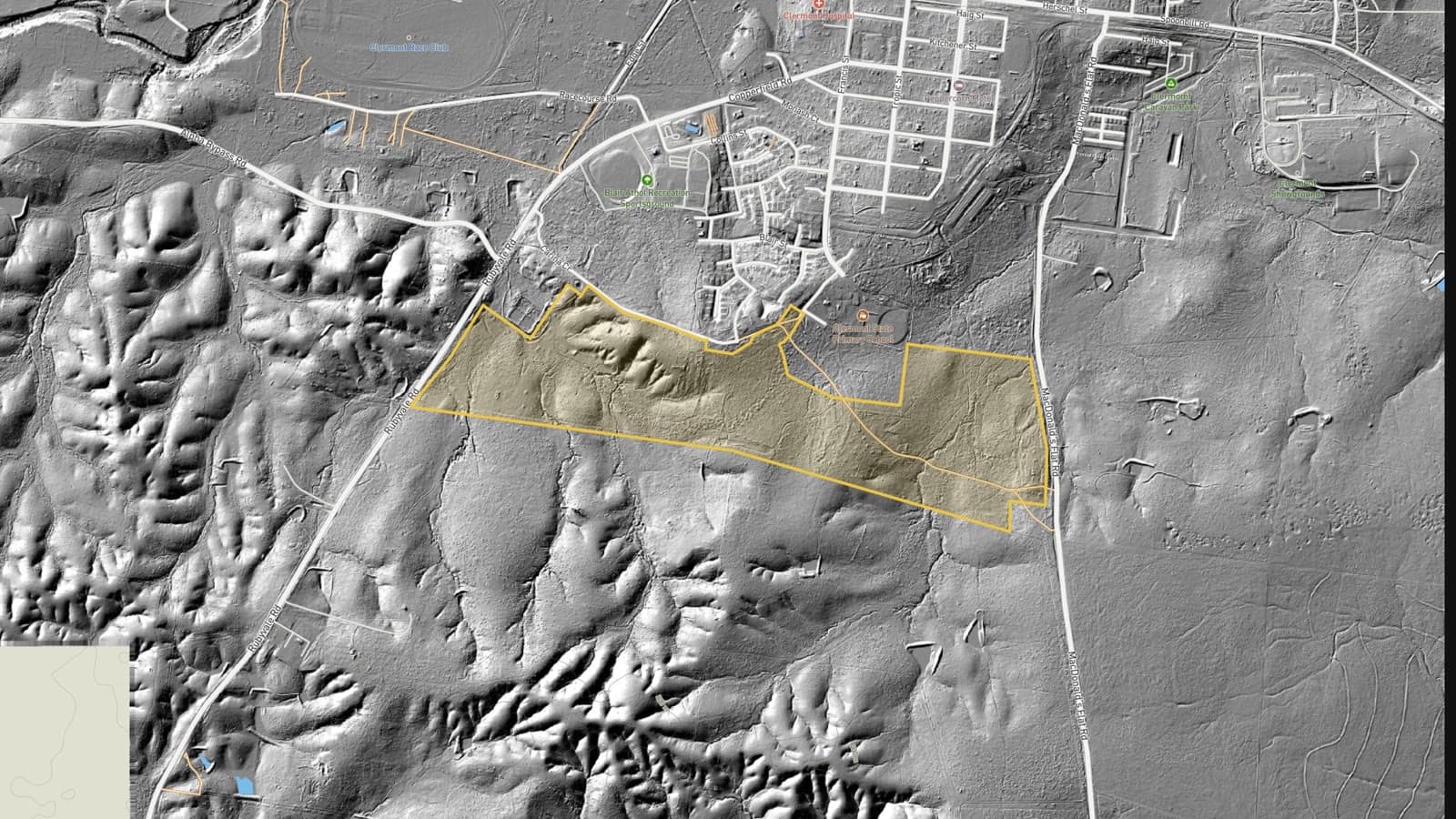
Small, at just over a square kilometre, but there are more than a hundred and twenty drill results around it and nearly forty old workings close by. Switch on the LiDAR layer and the trees disappear: you can see the shape of the ground and the scratchings the old-timers left behind. It's on the edge of town, so it's the easiest one to duck out to for a couple of hours. Town Reserve guide
3. Museum Reserve
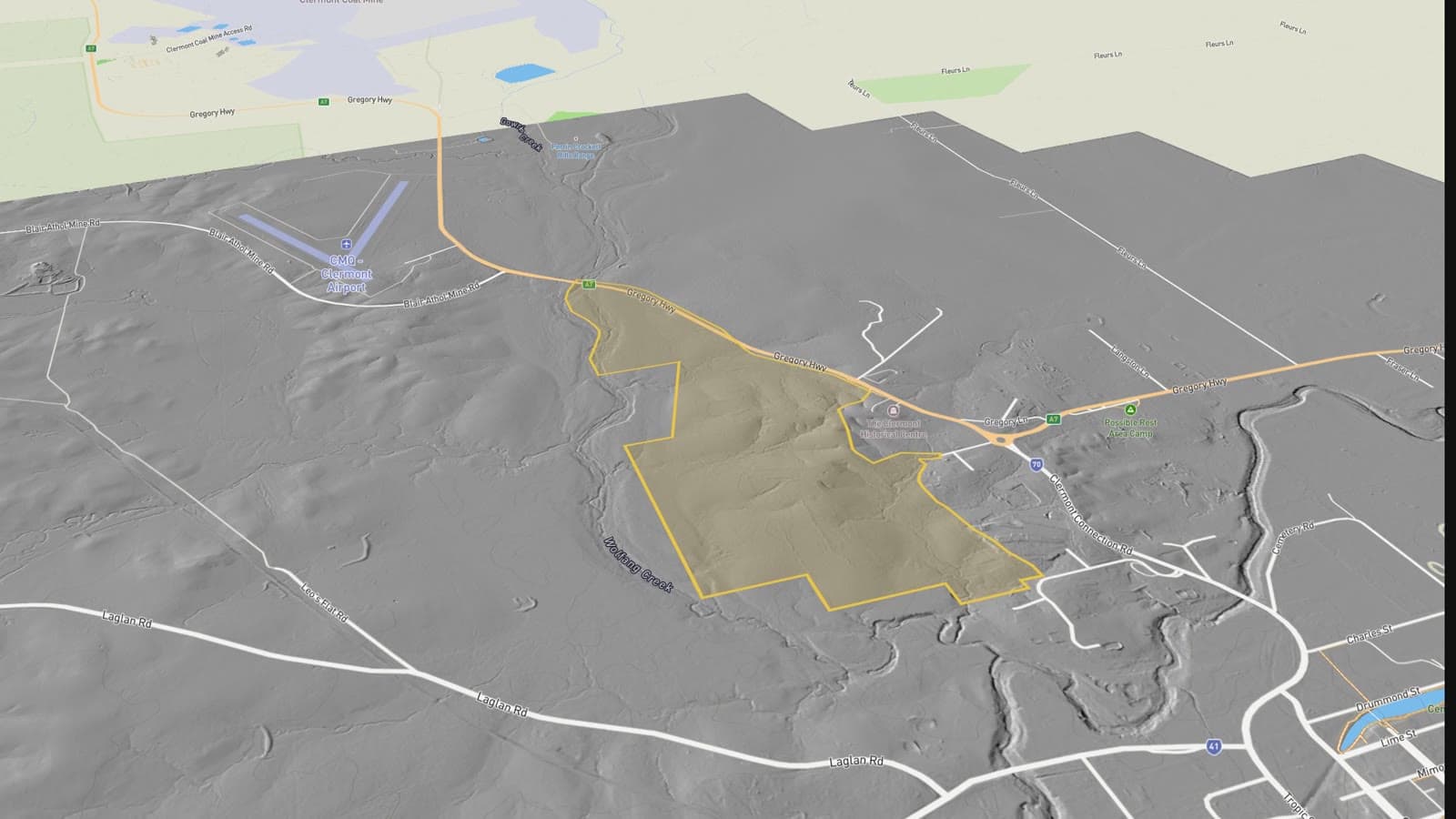
Museum Reserve is small, but it's completely covered by Dig Here's one-metre LiDAR, so you can plan your day from the couch: which gully to walk, where the old diggings are, and where nobody has touched. Turn on the watercourses layer too. Every creek has its flow direction, and gold drops out wherever the water slows down: the inside of bends, behind big rocks, and where a steep gully flattens out. Museum Reserve guide
4. McMasters
The biggest of the Clermont areas at over thirty square kilometres. Big ground means fewer people. Pick a gully, follow it upstream, and work the inside bends and the bedrock. McMasters guide
The other eight Clermont areas
Water is scarce out here in the dry, so panning can be hard. Plenty of people detect instead.
What to bring, and when to go
- Go in the cooler months, roughly May to September. Clermont is hot, dry country.
- Carry all your water. There is none in these areas, and you can't take it from dams or bores.
- Wear boots and long pants. This is snake country.
- Phone reception drops out quickly, so tell someone where you're going and download your maps before you leave town.
- Bring a detector if you can. In a dry creek it will out-fish a pan every time.
South-east Queensland: Warwick and Gympie
If Clermont is too far, there's gold a couple of hours from Brisbane. Around Warwick there are three spots: Thanes Creek, about forty kilometres west of town; Talgai State Forest, north-west of Warwick; and the big one, Durikai State Forest, with almost fifty square kilometres of permission area and nearly three hundred drill results around it.
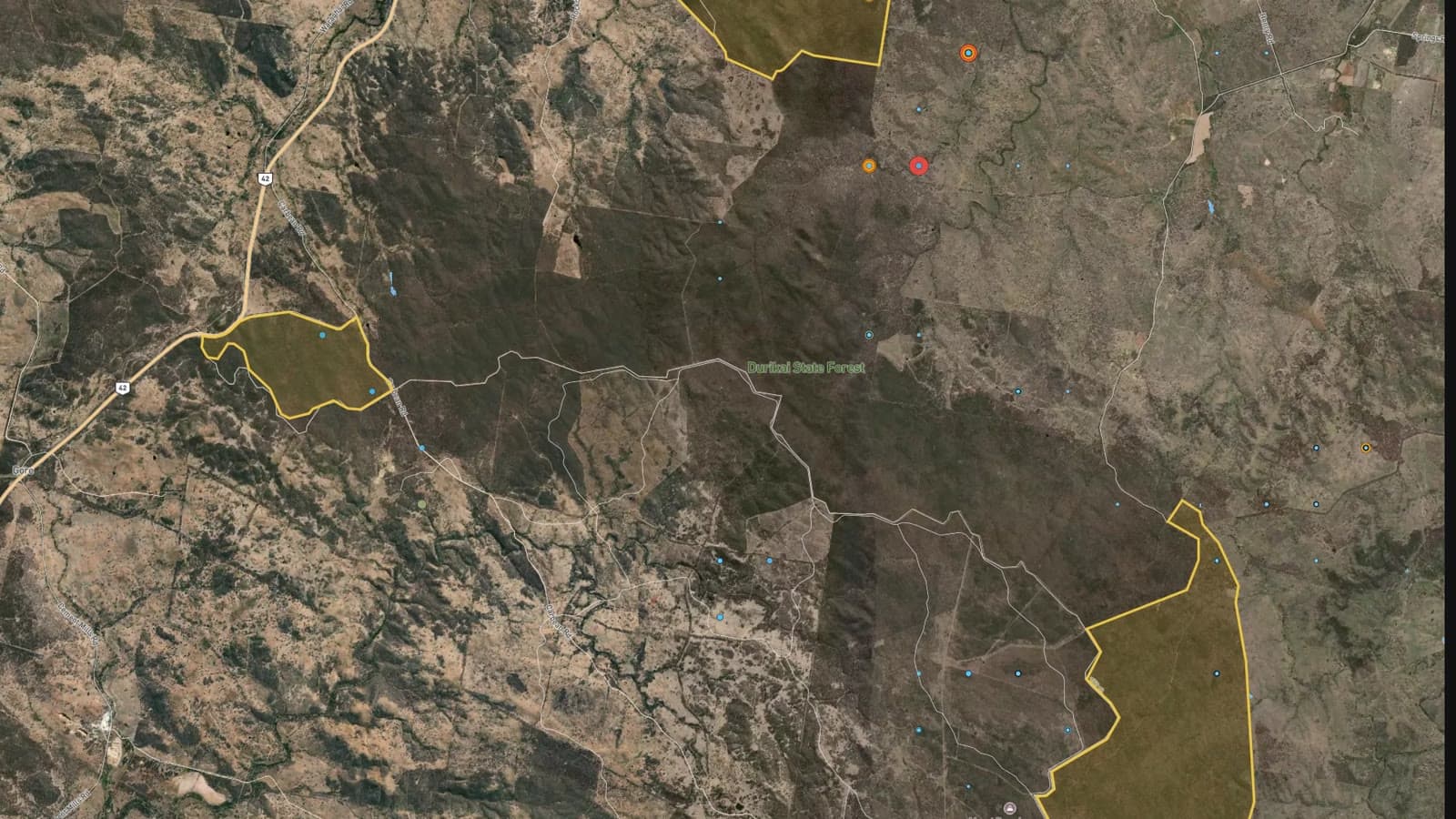
A heads-up for Durikai: a wind farm has gone in and added a lot of new tracks. Stick to the access tracks on the official map and stay inside the permission areas. The gold here is fine alluvial gold washed out of quartz reefs in the slate, so look in the creek gravels, the low banks and the cracks in rock bars.
Then there's Gympie. In 1867 a prospector found gold near the Mary River, and that rush is credited with rescuing the colony of Queensland. You can still pan Deep Creek, right in town. Pans only, in the creek bed, and stay off the banks.
Mount Morgan
Near Rockhampton, Mount Morgan was one of the richest gold mines in the world. Between 1882 and 1981 it produced around 250 tonnes of gold, and the early ore averaged nearly thirty grams per tonne. Right next door, the Mount Morgan No. 7 Dam reserve is open for fossicking. Stay inside the marked area, keep well clear of the dam, and no camping or fires.
Plan your trip
Before you go, check the weather and the snake risk, find the nearest fuel and water, and save your spots. Dig Here's Field Intelligence gives you all of that for any spot on the map. Download the area before you lose reception, because out there you will. And if you drive with CarPlay, Dig Here will tell you when you're passing old gold workings and your saved spots.
Every one of these seventeen areas has its own free guide, with directions, history, camping options and the official boundary. Fill your holes, take your rubbish home, and good luck out there.